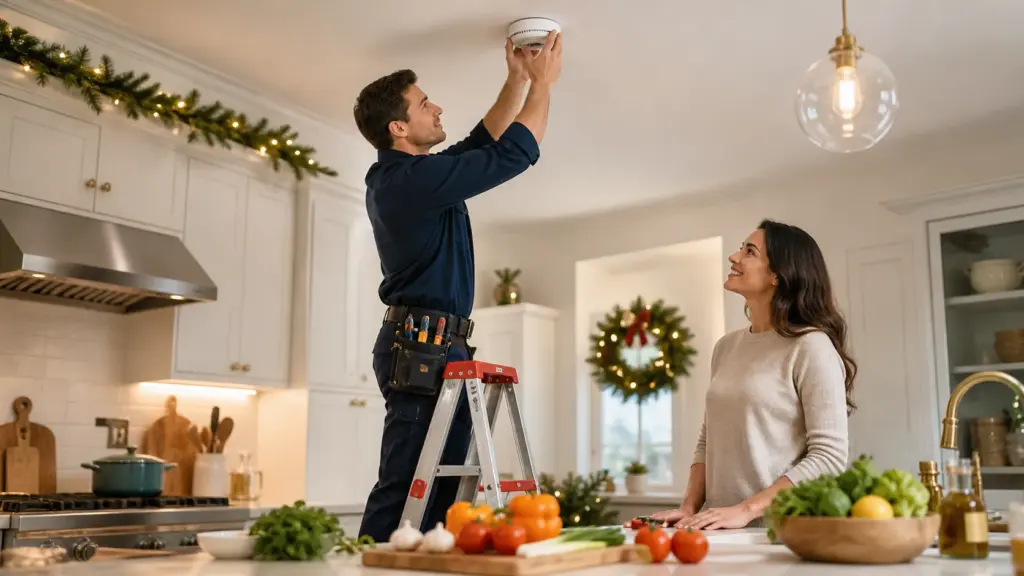
Keep Holiday Cooking Safer with Smarter Alarm Placement
Smoke alarms need to be in the right places to warn you early without sounding every time dinner gets busy. Late October is a good time to look at placement before the season brings more baking, roasting, frying, and people moving through the house.
During holiday cooking, it is easy to lose track of a pan while answering the door or helping guests. Good smoke detector installation helps protect your home while reducing nuisance alerts caused by ordinary kitchen activity. We recommend reviewing where your alarms are placed, how they are working, and whether your home’s layout has changed since they were installed.
Guide Smoke Detector Installation Beyond the Kitchen
A smoke alarm near the kitchen is only one part of a safer home. Smoke detector installation should provide coverage throughout the property, including every level of the home, areas near bedrooms, and routes you would use to get outside. We always recommend following applicable requirements and the alarm manufacturer’s instructions for the specific device being installed.
Kitchen placement takes a little thought. An alarm installed directly beside a stove, oven, toaster, or range hood may react to steam, heat, or everyday cooking smoke. That can lead to frequent false alerts, which are frustrating and may cause people to ignore an alarm when it matters most.
Instead of putting protection too close to cooking appliances, consider how smoke could travel from the kitchen into nearby areas. Proper placement can offer warning while keeping normal meal preparation from constantly setting off the alarm.
Professional advice can be especially helpful when your home has:
- Hardwired smoke alarms
- Interconnected alarm systems
- An older electrical system
- A renovated kitchen, basement, or living area
- New bedrooms or changed room layouts
We can assess the home as a whole, not just one room. That matters when wiring, ceiling shape, and household traffic patterns all affect where alarms can work best.
Protect Escape Routes and Sleeping Areas
When an alarm sounds, everyone needs to hear it quickly and know where to go. Hallways outside sleeping areas, stairways, and main escape routes deserve careful attention. These locations can provide warning before smoke blocks the path between bedrooms and an exit.
Placement is not always as simple as choosing the nearest ceiling spot. Corners and high areas where air can sit still may delay smoke from reaching an alarm. Open windows, exterior doors, supply vents, and fans can also change airflow. A vaulted ceiling, open-concept room, or long hallway may need a more careful review than a standard square room.
For larger homes and homes with more than one floor, interconnected alarms may be a helpful option. When one alarm detects smoke, connected alarms can sound throughout the home. This can be particularly useful when holiday guests are sleeping in a basement suite, a spare room, or another unfamiliar part of the house.
As we review alarm locations, we look at practical questions such as:
- Can people sleeping in each room hear the alarm?
- Does the alarm protect the route to an outside door?
- Is it clear of airflow that could interfere with detection?
- Has a renovation changed how smoke may move through the space?
An Electrical contractor St. John’s homeowners rely on can help assess these details when an alarm system is being added, replaced, or updated.
Prevent Nuisance Alerts Without Sacrificing Coverage
Repeatedly silencing an alarm, removing its battery, or disabling it during cooking creates a serious safety concern. If your alarm goes off often while you cook, the answer is usually not less protection. We often find that placement, cleaning, or an aging device needs attention.
Many alarms include a manufacturer-approved hush feature for short cooking-related alerts. When used as directed, it may quiet an alarm briefly while the air clears. After cooking is finished, make sure the alarm has returned to normal operation. A quiet alarm that has not reset is not ready to provide warning.
Before guests arrive, set aside time for simple seasonal checks:
- Gently remove dust from alarm openings
- Test each device using its test feature
- Check batteries where the manufacturer says they are replaceable
- Confirm alarms are not blocked by décor, paint, or stored items
- Replace devices according to the manufacturer’s stated timeline
Avoid spraying cleaners, paint, or air fresheners directly onto an alarm. If a unit is dirty, damaged, or acting unpredictably, professional assessment is safer than trying to work around the problem. Reliable coverage should never depend on remembering to reinstall an alarm after the kitchen has cooled down.
Test Every Alarm Before Holiday Guests Arrive
Smoke detector installation only works when each device receives regular attention. Before hosting overnight visitors, test alarms in guest rooms, basement spaces, hallways, and rooms that are not used every day. A device in an out-of-the-way area can be easy to forget, especially if it is hardwired and does not need a routine battery change.
Frequent chirping, repeated false alerts, visible damage, or a device that does not respond during testing are signs that the system may need a closer look. Hardwired alarms can also need assessment if they seem unreliable or if one interconnected unit does not respond with the others. When adding or replacing hardwired alarms, we recommend reviewing wiring and device compatibility rather than treating each alarm as a separate item.
Make Alarm Checks Part of Holiday Preparation
Along with planning meals and preparing guest rooms, include alarm testing and placement checks on your holiday list. A few minutes of attention before the first tray goes into the oven can help you spot concerns before the house is full.
For safer holiday cooking, keep alarms active, keep escape routes clear, and address recurring alerts instead of working around them. If the layout, wiring, or condition of your alarms raises questions, having a qualified professional review the system can help you make informed safety decisions.
Get Confidence In Your Home’s Alarm Coverage
ShockFree Electrical can assess your current setup and provide professional smoke detector installation tailored to your home. Our team can help identify suitable locations and address concerns with existing alarms. To discuss your needs, contact us today.